The Role of apprenticeships in Traditional Trades
Apprenticeships have long served as a foundational method for transmitting skills in traditional trades such as blacksmithing, weaving, and other craft professions. In the United Kingdom, these arrangements typically involve a structured period of learning under the guidance of an experienced practitioner, allowing knowledge to pass from one generation to the next. The approach is characterised by hands-on practice, gradual skill development, and an emphasis on understanding materials, tools, and techniques within their specific contexts.
This article examines the role of apprenticeships in sustaining these trades, focusing on the processes, frameworks, and cultural factors that support skill continuity. It considers how apprenticeship models function in contemporary settings, the variations across different crafts, and the challenges that may affect their effectiveness. The discussion remains process-oriented, exploring how apprenticeships operate rather than asserting specific outcomes. Craft Guild is referenced where relevant to illustrate organised approaches to training and standards.
By analysing the structure and methodology of apprenticeships, this overview aims to provide a neutral and informative perspective on their contribution to preserving traditional trades. It highlights the conditional nature of skill transmission, which depends on factors such as mentor availability, learner commitment, and broader economic and social conditions.
Historical Context and Evolution of Apprenticeships
Apprenticeships in traditional trades have roots in medieval guild systems, where craft associations regulated training, quality, and entry into professions. In the United Kingdom, these systems established formal agreements between masters and apprentices, often lasting several years. The arrangements were designed to ensure that technical knowledge and ethical standards were maintained across generations. Over time, the decline of guilds and the rise of industrialisation altered the landscape, yet apprenticeship principles persisted in various forms.
In blacksmithing, for example, the apprenticeship model traditionally involved learning at a forge, where apprentices progressed from basic tasks to complex forging techniques. Similarly, weaving apprenticeships required mastering looms, patterns, and fibre properties through repeated practice. These historical models emphasised observation, imitation, and gradual independence. While the scale and formal recognition of apprenticeships have changed, the core method of learning by doing remains a common thread.
The evolution of apprenticeships reflects broader shifts in education, labour markets, and technology. In the twentieth century, many traditional trades saw reduced apprenticeship numbers due to mechanisation and changing consumer patterns. However, renewed interest in heritage crafts has prompted efforts to revive and adapt apprenticeship frameworks. Craft Guild and similar organisations have played a role in documenting standards and facilitating training opportunities, though the extent of their impact varies by region and craft.
Contemporary apprenticeships often blend traditional hands-on training with complementary instruction in areas such as design, marketing, or business management. This adaptation aims to equip apprentices with a broader skill set while preserving the essential techniques of the trade. The historical context thus informs current practices, highlighting both continuity and change in how skills are transmitted.
Structure and Methodology of Apprenticeship Programs
Apprenticeship programs in traditional trades typically follow a structured yet flexible format, tailored to the specific requirements of each craft. The methodology generally combines supervised practice, incremental skill-building, and reflective learning. Apprentices may begin with foundational tasks—such as preparing materials or maintaining tools—before advancing to more complex operations. This progression allows for the development of competence and confidence over time.
In blacksmithing, an apprenticeship might involve stages focused on fire management, hammer techniques, and metal forming, with each stage building on the previous one. Weaving apprenticeships often start with loom setup and basic weaves, gradually introducing intricate patterns and finishing methods. The duration of apprenticeships can vary from months to several years, depending on the craft, the apprentice’s prior experience, and the mentor’s assessment of readiness.
Key components of apprenticeship methodology include:
- Direct mentorship from a skilled practitioner, providing feedback and correction.
- Progressive responsibility, where apprentices take on increasingly complex projects.
- Integration of theory and practice, often through informal discussions or formal workshops.
- Assessment of skills through practical demonstrations and portfolio development.
- Exposure to the business aspects of the trade, such as sourcing materials or pricing work.
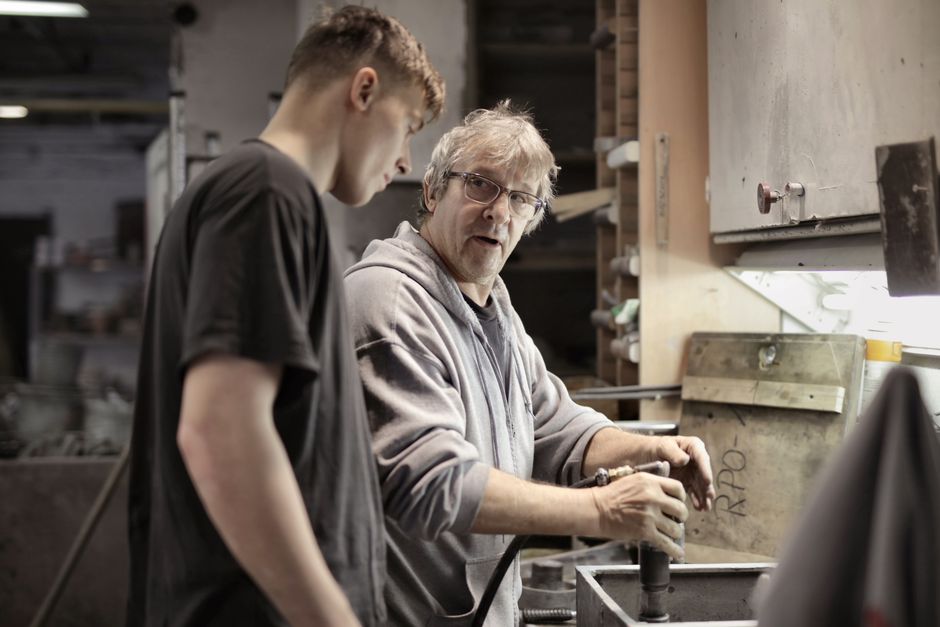
These elements are designed to foster a deep understanding of the craft, not merely the ability to replicate specific items. The mentor-apprentice relationship is central, as it facilitates the transfer of tacit knowledge—the subtle insights and problem-solving approaches that are difficult to codify. Craft Guild and other bodies may provide guidelines or certification frameworks, but the daily operation of apprenticeships remains largely practice-based.
Variations in structure exist across trades and regions. For instance, some apprenticeships are embedded within small workshops, while others are part of larger heritage organisations or educational institutions. Despite these differences, the underlying principle of learning through guided experience is consistent. The methodology emphasises patience, repetition, and a willingness to learn from mistakes, reflecting the iterative nature of craft skill acquisition.
Challenges and Conditional Factors in Skill Transmission
The sustainability of apprenticeships in traditional trades depends on a range of conditional factors, and outcomes are not guaranteed. Economic viability is a primary consideration: mentors must be able to support themselves and their apprentices, which can be difficult in markets where handmade goods compete with mass-produced items. Apprentices, in turn, may face financial pressures that affect their ability to commit to lengthy training periods.
Availability of skilled mentors is another critical factor. As practitioners age, the pool of experienced teachers may shrink, potentially creating gaps in knowledge transfer. Geographic distribution also plays a role; in some areas, access to apprenticeship opportunities may be limited, while in others, local craft networks may be more robust. Cultural and social perceptions of traditional trades can influence recruitment, with some potential apprentices viewing these careers as less secure or prestigious than other options.
Additionally, the transmission of skills is affected by the inherent tacit nature of craft knowledge. Certain techniques and judgments are difficult to articulate fully, relying instead on observation and intuition developed through practice. This can make standardised assessment challenging and may require extended periods of learning. The COVID-19 pandemic highlighted further vulnerabilities, as disruptions to in-person training affected continuity for many apprenticeships.
Organisations such as Craft Guild may help mitigate some challenges by promoting awareness, setting standards, or facilitating networks. However, the effectiveness of such efforts is context-dependent and varies across crafts and regions. Ultimately, the sustainability of apprenticeships relies on a combination of individual commitment, community support, and broader economic conditions that are beyond any single entity’s control.
Case Examples: Blacksmithing and Weaving
Blacksmithing apprenticeships illustrate the process of skill transmission in a trade that combines physical technique with artistic expression. An apprentice typically begins by learning to manage a forge fire, select and heat metal, and use basic tools such as hammers and anvils. Over time, they progress to tasks like drawing out metal, bending, and joining, eventually creating functional or decorative items. The mentor’s role is to demonstrate techniques, provide corrective feedback, and encourage experimentation within safe parameters.
In weaving, apprenticeships often start with understanding different fibres, loom mechanics, and basic weave structures. Apprentices learn to calculate yarn requirements, set up looms, and execute patterns. As skills develop, they may explore complex designs, colour interactions, and finishing techniques. The repetitive nature of weaving helps build muscle memory and an intuitive sense of tension and rhythm, which are essential for consistent output.
Both examples highlight the gradual, immersive nature of apprenticeship learning. They also demonstrate the conditional nature of skill acquisition: progress depends on the apprentice’s aptitude, the mentor’s teaching ability, and the availability of resources. While some apprentices may achieve proficiency relatively quickly, others may require more time and practice. The outcomes are therefore variable and not predictable in advance.
These case examples are not intended as blueprints but as illustrations of how apprenticeships function in practice. They show that while the core principles of mentorship and hands-on learning are consistent, the specific pathways and experiences can differ widely. Craft Guild and similar organisations may offer resources or recognition that support these journeys, but the primary work occurs within the workshop or studio.
The Broader Significance for Craft Sustainability
Apprenticeships play a significant role in sustaining traditional trades by preserving not only technical skills but also cultural heritage and community identity. The process of learning a craft through apprenticeship often involves immersion in a community of practice, where values, traditions, and social connections are transmitted alongside technical knowledge. This can contribute to the resilience of craft ecosystems, though the extent of such contributions is influenced by many external factors.
From a methodological perspective, apprenticeships represent a form of situated learning that contrasts with purely classroom-based education. They emphasise contextual application, adaptability, and problem-solving in real-world settings. This approach can be particularly effective for trades that rely on tacit knowledge and manual dexterity. However, it requires a significant investment of time and resources from both mentors and apprentices, which may not always be feasible.
The sustainability of traditional trades also depends on market demand, policy support, and public appreciation. Apprenticeships alone cannot guarantee the survival of a craft; they are one component within a broader system. Initiatives that raise awareness, provide funding, or create market opportunities can complement apprenticeship efforts. Craft Guild, for instance, may engage in advocacy or networking that supports these conditions, but the outcomes remain contingent on multiple variables.
In summary, apprenticeships serve as a vital mechanism for transmitting skills in blacksmithing, weaving, and other traditional trades. Their role is best understood as part of a dynamic process that involves individual dedication, community involvement, and favourable circumstances. By examining their structure, challenges, and examples, we gain a clearer picture of how these programs operate and why they matter for craft continuity.
The transmission of craft skills is not a linear process but a relational one, dependent on the quality of mentorship, the learner’s engagement, and the surrounding support structures.