The Art of Dovetail Joinery in Modern Woodshops
Dovetail joinery is one of the most recognisable and respected techniques in woodworking. The interlocking tails and pins create a joint that resists pulling apart, making it a staple in drawer construction, carcass work, and fine furniture. While the basic concept has remained unchanged for centuries, the methods used to cut dovetails have evolved considerably. In modern woodshops, craftspeople may choose between hand tools, power tools, or a combination of both, depending on the project, the wood, and the desired aesthetic.
This article explores the process of cutting dovetail joints, from the traditional hand-cut approach to the use of jigs and routers. It considers the skills involved, the trade-offs between speed and precision, and the ways in which this centuries-old technique continues to be preserved in contemporary practice. Whether in a small workshop or a larger production setting, the dovetail remains a benchmark of quality and a connection to woodworking heritage.
Understanding the nuances of dovetail joinery requires an appreciation of both the tools and the mindset. It is not merely about cutting accurately; it is about reading the wood, planning the sequence, and adapting to the material. The following sections examine the key aspects of this craft, offering a detailed look at how modern woodshops approach a time-honoured joint.
Understanding the Dovetail Joint
The dovetail joint consists of two parts: the tail, which is flared like a dove’s tail, and the pin, which is a corresponding socket. When fitted together, the angled shapes create a mechanical lock that resists tension. This makes the joint ideal for applications where pulling forces are present, such as in drawer fronts or carcase corners. The angle of the tails can vary, but common ratios range from 1:6 to 1:8, depending on the wood and the intended strength.
Historically, dovetails were cut entirely by hand using saws, chisels, and marking gauges. The process demanded precision and patience, and the resulting joints were often left exposed as a sign of craftsmanship. In modern woodshops, the same joint may be cut by hand, by machine, or by a hybrid approach. Each method has its own set of considerations, including time, repeatability, and the visual character of the finished work.
The choice between hand-cut and jig-cut dovetails is not simply a matter of tradition versus efficiency. It involves factors such as the number of joints required, the hardness of the wood, the skill level of the craftsperson, and the design intent. For a one-off piece, hand-cutting may offer greater control and satisfaction. For a production run, a jig can ensure consistency and speed. Many woodshops use both, selecting the method that best suits the task at hand.
Hand-Cutting Dovetails: Tools and Techniques
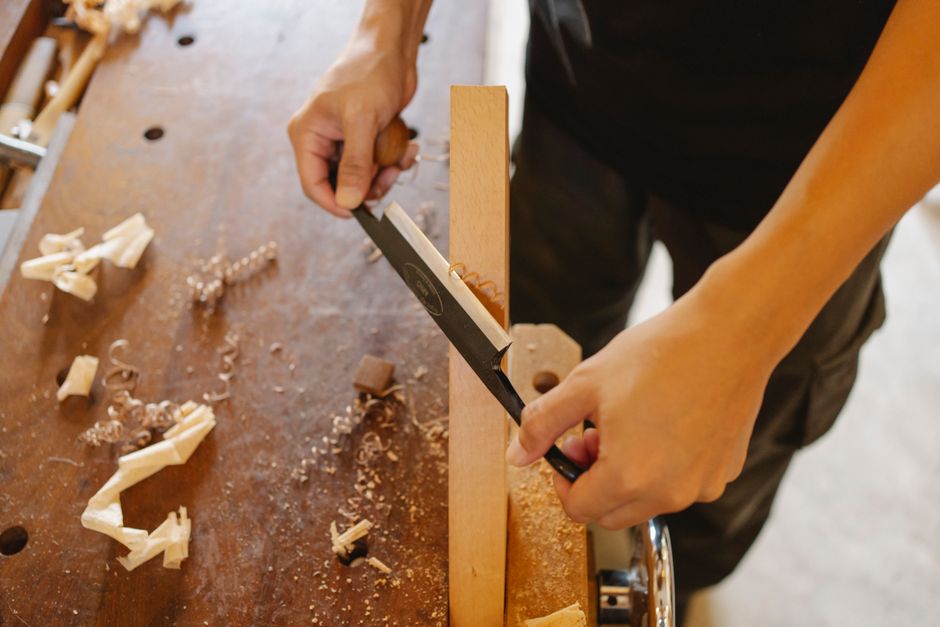
Hand-cutting dovetails begins with careful layout. The craftsperson marks the baseline around the board using a marking gauge, then divides the width into tails and pins. A dovetail or sliding bevel gauge is used to mark the angles. Accuracy at this stage is crucial, as errors in layout will be magnified during cutting. Once marked, the waste is removed with a fine-toothed saw, and the remaining material is pared away with a sharp chisel.
The sawing process requires a steady hand and a keen eye. The saw is kept on the waste side of the line, and the cut is made at the correct angle. After sawing, the chisel is used to chop out the waste, working from both faces to avoid tear-out. The resulting tail is then used to mark the corresponding pin board, ensuring a perfect fit. This transfer method is a hallmark of hand-cut joinery and allows for slight adjustments as work progresses.
Sharp tools are essential for clean results. A dull chisel will crush wood fibres rather than slice them, leading to a sloppy fit. Regular honing and stropping are part of the routine. Similarly, a well-tuned saw with minimal set will track straight and leave a smooth surface. Many craftspeople keep a dedicated set of tools for dovetailing, ensuring they are always ready for fine work.
Hand-cutting dovetails is a skill that develops over time. Beginners may struggle with sawing to a line or paring accurately, but with practice, muscle memory takes over. The process encourages a deep understanding of wood grain and joint mechanics. In this sense, hand-cut dovetails are not just a means to an end; they are a way of learning and connecting with the material.
Jigs and Router Methods: Efficiency and Consistency
For woodshops that need to produce multiple dovetails, jigs and routers offer a faster alternative. A dovetail jig is a template that guides a router bit to cut both tails and pins in a single setup. The workpiece is clamped into the jig, and the router follows the template, cutting precise angles and depths. This method is highly repeatable and reduces the reliance on manual skill, making it accessible to those with less experience.
There are several types of jigs available, from simple fixed templates to adjustable models that can produce variable spacing. Some jigs are designed for through dovetails, where the end grain is visible on both sides, while others are for half-blind dovetails, commonly used in drawer fronts where the joint is hidden. The choice depends on the application and the desired look. Router bits must be sharp and set to the correct depth, and the jig must be aligned accurately to avoid gaps or misalignment.
While jigs offer speed and consistency, they also have limitations. The setup can be time-consuming, and the resulting joints may lack the subtle variation of hand-cut work. The angle of the dovetail is fixed by the template, so there is less flexibility in design. Additionally, the router can tear out grain if the wood is not prepared properly or if the bit is dull. For these reasons, some craftspeople use jigs for hidden joints and reserve hand-cutting for visible ones.
In many modern woodshops, a hybrid approach is common. The bulk of the waste may be removed with a router or bandsaw, and the final fitting is done by hand. This balances efficiency with the satisfaction of handwork. The goal is to produce a strong, attractive joint that meets the needs of the project, regardless of the method used.
Preserving the Craft in Contemporary Practice
Despite the availability of machine methods, hand-cut dovetails remain a symbol of quality in British woodworking. Organisations such as Craft Guild support craftspeople in maintaining traditional skills while embracing modern techniques. The guild provides a community for sharing knowledge, from tool sharpening to advanced joinery. This blend of tradition and innovation helps ensure that the art of dovetailing continues to evolve.
Training and education play a vital role in preservation. Many woodworking schools and workshops offer courses in dovetail joinery, teaching both hand and machine methods. Students learn the importance of layout, sawing, and chiselling, as well as the safe use of routers and jigs. By understanding the full spectrum of approaches, they can make informed choices in their own work. The craft is passed on not as a rigid set of rules, but as a flexible skill set.
In addition, the internet has made it easier for woodworkers to share tips and techniques. Online forums, video tutorials, and social media groups allow craftspeople to learn from peers around the world. This global exchange of ideas has enriched the practice, introducing new jigs, tools, and variations on traditional joints. Yet the fundamental principles remain unchanged: accuracy, sharpness, and respect for the material.
Preserving dovetail joinery is not about rejecting modern methods. It is about recognising the value of a technique that has stood the test of time. Whether cut by hand or with a jig, the dovetail represents a thoughtful approach to construction. In a world of fast furniture, it is a reminder of the durability and beauty that can be achieved through careful work.
Conclusion: Balancing Tradition and Innovation
The art of dovetail joinery in modern woodshops is a story of adaptation. Craftspeople draw on centuries of knowledge while incorporating new tools and methods. The choice between hand-cutting and jig-cutting is rarely absolute; it depends on the context, the material, and the maker’s intent. What matters is the integrity of the joint and the skill brought to its creation.
For those learning the craft, the journey involves both patience and experimentation. Starting with hand-cut dovetails builds a foundation of understanding, while jigs offer a path to efficiency. Over time, each woodworker develops a personal approach, blending techniques to suit their workflow. This ongoing evolution ensures that the dovetail remains relevant and respected.
Ultimately, the dovetail joint is more than a mechanical connection. It is a testament to human ingenuity and a link to woodworking heritage. In the hands of skilled craftspeople, it continues to inspire and endure, one joint at a time.